Newsletter Subscribe
Enter your email address below and subscribe to our newsletter

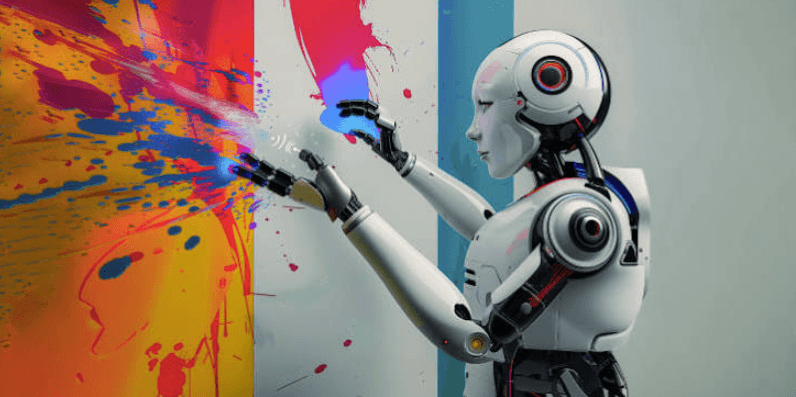
AI is reconfiguring graphic design by automating routine tasks, accelerating ideation, and delivering data-driven insights that sharpen decisions. It enables rapid prototyping, scalable experimentation, and more efficient workflows across branding, UI/UX, and print. Yet adoption hinges on transparent data provenance, robust ethics, and accountable governance to preserve creative autonomy and ensure inclusive, accessible outcomes. As systems grow more capable, the balance between control and experimentation will shape what designers can achieve next.
AI has begun redefining the core competencies of graphic design by automating routine tasks, enabling rapid prototyping, and enhancing decision-making with data-driven insights.
This foundational shift scrutinizes AI bias, demanding transparent data provenance and robust AI ethics.
designers encounter new controls over creative autonomy, ensuring reproducibility and accountability while sustaining freedom to innovate within ethical, scalable pipelines that balance artistry and algorithmic rigor.
From ideation to iteration, the integration of AI-driven tools accelerates the creative cycle by compressing conceptual exploration, prototyping, and feedback loops into data-informed workflows.
The discourse emphasizes idea generation, rapid prototyping, and design collaboration, with prompt optimization guiding iterative refinements.
This analytical progression enables scalable experimentation, reduces lag across teams, and supports freedom through transparent, measurable, reproducible design decisions.
Practical AI tools for designers today center on streamlining workflows, enhancing accuracy, and enabling scalable experimentation across disciplines such as branding, UI/UX, and print. Analysts note mature options prioritize automation, prototyping, and data-driven decisions. AI tooling budgets influence adoption pace, while design workflow integration determines practical impact, interoperability, and ROI, shaping disciplined, repeatable creative processes with measurable outcomes.
See also: How Technology Is Driving Enterprise Modernization
The integration of AI into design workflows raises critical questions about ethics, accessibility, and the preservation of the human touch, demanding rigorous evaluation of bias, accountability, and transparency across tools and outputs.
This examination reframes design governance, enforcing ethics in AI and accessibility in AI as core constraints, guiding responsible automation, inclusive interfaces, and human-centric oversight for sustainable, freedom-respecting innovation.
AI design tools influence creative originality through algorithmic augmentation, while authorship rights hinge on detectable human input and intent; AI authenticity remains debated, and Copyright ownership depends on contributed guidance, licensing terms, and jurisdictional interpretations within evolving digital production landscapes.
A hypothetical case study demonstrates a structured rubric for evaluating aesthetics and usability; evaluating aesthetics and assessing consistency guide iterative audits. The approach emphasizes metrics, reproducibility, and risk assessment, enabling designers to pursue freedom with technical rigor.
AI will augment rather than replace designers; freelancers and agencies adapt through AI ethics and enhanced freelancer collaboration, maintaining human judgment and creativity while leveraging automation for scalable workflows in a forward-thinking, technically rigorous environment.
Coincidence marks the moment: small studios leverage AI procurement to streamline studio workflows, adopting affordable tooling and seamless client onboarding, enabling competitive pricing. They analyze efficiency gains, precisely aligning workflow costs with outcomes for measured, freedom-minded growth.
Data privacy concerns in client projects center on data leakage risks and model training disclosure, where sensitive assets may be exposed through uploads or embeddings, potentially impacting trust; proactive governance and transparent agreements mitigate these vulnerabilities while enabling forward-thinking collaboration.
The trajectory of AI in graphic design signals a future where automation and human judgment collaborate to redefine workflows and outcomes. As models augment ideation and execution, they must be tethered to transparent provenance, robust ethics, and inclusive governance. This alliance promises accelerated iteration, data-driven insights, and scalable creativity, yet demands vigilance to preserve authorial intent and accessibility. In this evolving landscape, AI is the catalyst, with designers steering the compass—innovation marching in lockstep with responsibility. A beacon, not a brute force.