Newsletter Subscribe
Enter your email address below and subscribe to our newsletter

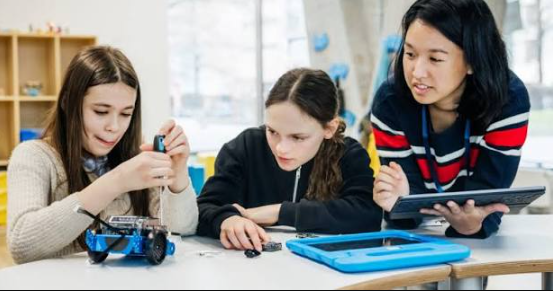
Education has changed significantly over the past decade. Students no longer rely exclusively on printed textbooks, classroom notes, and library resources to develop their knowledge. Today, digital learning materials, online tutorials, educational websites, and multimedia resources play an important role in how people study and share information. While having access to so many resources is convenient, managing them effectively requires a little organization and an understanding of the digital tools that make learning easier.
Whether you are a student preparing for exams, a teacher developing online lessons, or someone who enjoys learning independently, knowing how to manage digital content can save time and improve productivity. Even small details, such as choosing the right image format for educational presentations, can make a difference. For instance, a reliable WebP to JPG tool can help transform downloaded images into a more widely compatible format, making them easier to include in assignments, study guides, presentations, and other learning materials.
Having access to information is no longer the biggest challenge for most learners. The real challenge is finding relevant information, understanding it, and organizing it in a way that makes it easy to revisit.
Think about a student working on a research assignment. They might collect information from online articles, download charts, save photographs, watch instructional videos, and take notes in several different applications. Without a clear system, these resources can quickly become difficult to manage.
A simple digital organization strategy can prevent this problem.
Start by creating separate folders for individual subjects, courses, or projects. Within each folder, organize documents according to their purpose. For example, a biology folder might contain lecture notes, revision materials, diagrams, practice questions, and completed assignments.
This approach makes it easier to locate important information when deadlines approach.
It also reduces the temptation to repeatedly search for resources that have already been downloaded or saved.
See also: How Artificial Intelligence Is Changing Everyday Life
Accessibility is an important part of effective learning. Educational materials should be easy to open, understand, and share across different devices.
Students frequently move between laptops, tablets, and smartphones. A document that works perfectly on one device might display differently on another. Images may fail to load in certain applications, while some file formats may not be supported by older software.
Choosing commonly supported file formats can help reduce these issues.
For example, JPEG images are widely recognized across operating systems, browsers, presentation applications, and document editors. This makes them a practical option when preparing visual learning materials that need to work in different environments.
Teachers can also benefit from considering compatibility when distributing digital resources. A presentation containing diagrams, illustrations, and screenshots should be accessible to students regardless of which device they use.
Before sharing educational content, it is worth checking that all images display correctly and that documents open without requiring additional software.
People learn in different ways. Some prefer reading detailed explanations, while others understand difficult concepts more easily through diagrams, illustrations, photographs, and videos.
Visual learning can be particularly helpful when studying subjects that involve complex relationships or processes.
Consider a geography lesson about the water cycle. Reading about evaporation, condensation, and precipitation provides useful information, but a clearly designed diagram can make the relationship between these stages much easier to understand.
The same applies to mathematics, science, history, and language learning.
Here are several practical ways to incorporate visual materials into your study routine:
The goal is not to decorate study materials with unnecessary graphics. Every visual element should help explain something or make information easier to remember.
Digital learning provides access to an enormous amount of information, but not every online resource is reliable.
One of the most valuable skills students can develop is the ability to evaluate information before using it.
When researching a topic, consider the following questions:
Who created the content?
Look for information published by recognized educational institutions, qualified professionals, established organizations, or credible subject experts.
When was it published?
Some subjects, particularly technology, science, and current affairs, change quickly. Older information may no longer reflect the latest developments.
Does the source provide evidence?
Reliable educational content should support important claims with research, references, examples, or verifiable information.
Can the information be confirmed elsewhere?
Comparing several credible sources can help identify inaccuracies and provide a more balanced understanding of a subject.
Another useful habit is to take notes in your own words rather than copying entire paragraphs. Summarizing information encourages active thinking and makes revision more effective.
Well-prepared study materials can make a significant difference when preparing for examinations or completing assignments.
However, effective notes do not need to be complicated. A simple structure is often more useful than pages of information without a clear organization.
Begin with a descriptive heading, followed by the main concepts you need to understand. Break complicated topics into smaller sections and include examples wherever possible.
For subjects that require memorization, flashcards are particularly useful. Each card should contain a question, definition, formula, or concept on one side and the corresponding answer on the other.
You can also create digital revision documents that combine written explanations with relevant visual resources.
When preparing these documents, keep a few design principles in mind:
A clean layout helps readers focus on the information instead of struggling to navigate the document.
Images are a regular part of modern educational content. Students use them in presentations, research projects, online assignments, and revision materials. Teachers also depend on visual resources when preparing lessons and explaining difficult concepts.
However, downloading images from websites can introduce file compatibility challenges.
WebP, for example, is an image format commonly used online because it can deliver relatively small file sizes while maintaining good visual quality. This makes it useful for websites and digital platforms.
The difficulty is that not every application or older workflow handles this format equally well.
If you download an educational diagram or photograph and discover that your preferred document editor does not support it, converting the image into a more familiar format may be a practical solution.
Before converting any image, consider its intended use.
For a classroom presentation, clarity is usually more important than achieving the smallest possible file size. For an online learning resource, however, loading speed and image dimensions may also matter.
It is also worth keeping an original copy of important images before making changes. This gives you the flexibility to return to the original file if the converted version does not meet your requirements.
Even the best digital tools cannot replace consistency.
Students who establish realistic study routines often find it easier to manage their workload, remember important information, and avoid last-minute pressure.
Start by identifying your most important learning goals. Instead of planning to study an entire subject in one sitting, divide it into smaller tasks.
For example, you might spend 30 minutes reviewing lecture notes, 20 minutes answering practice questions, and another 10 minutes summarizing what you learned.
Short breaks between sessions can also help maintain concentration.
At the end of each study session, take a few minutes to organize newly downloaded materials, rename important files, and record any questions that still need answering.
These small habits prevent digital clutter from building up and make it easier to continue studying the next day.
Successful digital learning is about more than having access to educational websites and online resources. It involves developing good research habits, organizing information, creating useful study materials, and choosing tools that make everyday tasks easier.
By keeping digital resources organized, using visuals effectively, checking information carefully, and maintaining a consistent study routine, students and educators can create a more productive learning experience. Small improvements in the way educational content is managed can lead to better understanding, greater efficiency, and more confident learning over time.