Newsletter Subscribe
Enter your email address below and subscribe to our newsletter

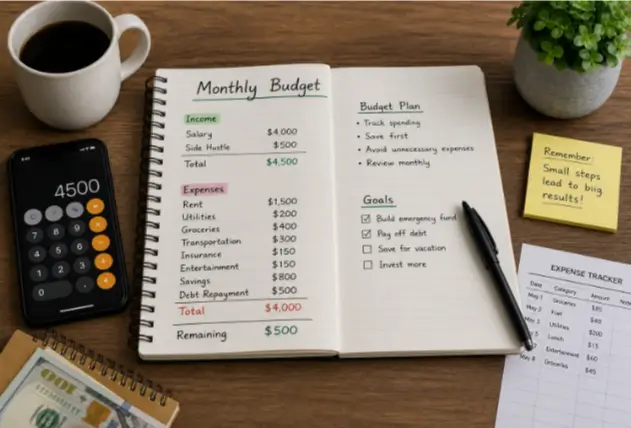
Managing money becomes much easier when you have a clear plan for your income and expenses. Many people work hard, receive their salary, pay their bills, and still wonder where their money went by the end of the month. This often happens because spending decisions are made without a proper budget. A monthly budget helps you understand your financial habits, prepare for important expenses, and make better decisions with the money you already earn.
Creating a budget does not mean giving up everything you enjoy. It simply means deciding where your money should go before it disappears through small purchases and unexpected costs. A useful budget should fit your real lifestyle instead of forcing you to follow unrealistic rules.
The first step is knowing exactly how much money you have available. Write down your regular income after taxes and other necessary deductions. If you receive a fixed salary, this amount may remain similar every month. However, freelancers, business owners, and people who work different hours may have changing income.
If your earnings are not consistent, calculate an average using several recent months. For a safer plan, build your regular budget around a lower income estimate rather than assuming every month will be your best month.
Include all reliable sources of income, such as salary, business earnings, regular freelance work, or other payments. Do not include uncertain money that you might receive in the future. A budget based on money you do not actually have can create unnecessary financial pressure.
Before setting spending limits, understand your current habits. Review bank statements, payment records, receipts, and cash purchases from the previous month. Divide your expenses into simple categories so you can see which areas take the largest part of your income.
Common categories include housing, groceries, transportation, utilities, insurance, education, entertainment, subscriptions, and personal shopping.
Small expenses deserve attention too. A daily coffee, frequent food delivery, unused subscriptions, or repeated online purchases may seem unimportant individually. Together, however, they can use a meaningful part of your monthly income.
Tracking expenses is not about judging yourself. It is about collecting information. Once you understand your spending habits, you can decide which costs are necessary and which ones can be reduced.
A practical budget distinguishes between essential expenses and optional spending. Needs include costs that support your basic living requirements, such as rent, food, transportation to work, utility bills, and necessary medical expenses.
Wants are purchases that make life enjoyable but are not essential. These may include entertainment subscriptions, expensive clothing, restaurant meals, upgraded gadgets, and unnecessary shopping.
You do not have to remove every want from your budget. Instead, give optional spending a reasonable limit. This approach makes it easier to enjoy your income without allowing small purchases to interfere with important goals.
For example, someone who spends too much on food delivery could choose to order less often and prepare more meals at home. The goal is to make a manageable change that can continue over time.
See also: How Small Businesses Can Build a Strong Digital Presence
There is no single budgeting method that works for everyone. One popular approach is the 50/30/20 method. Under this guideline, around 50 percent of income goes toward needs, 30 percent toward wants, and 20 percent toward savings or debt repayment.
These percentages are starting points, not strict rules. People living in expensive areas may need to spend more than half their income on essential costs. Someone paying off high interest debt may also need to direct more money toward repayments.
Another option is zero based budgeting. With this method, you assign a purpose to every dollar of your income. Money is divided among bills, savings, debt payments, groceries, transportation, and personal spending until the full amount is planned.
You can also use a simple category budget. This method works well for people who prefer flexibility and do not want to manage too many calculations.
Choose the approach that you can follow consistently. A simple budget used every month is more useful than a complicated plan abandoned after one week.
Many people save whatever money remains after paying expenses. The problem is that there may be very little left at the end of the month. A better approach is to include saving as a planned expense.
Decide on a realistic amount and move it into a separate savings account when you receive your income. Even a small contribution can help you develop a regular habit. If your financial situation improves, you can gradually increase the amount.
Start by building an emergency fund for unexpected expenses. This money can help cover urgent car repairs, medical costs, temporary income loss, or necessary home repairs. Without emergency savings, an unexpected bill may force you to borrow money.
After establishing a basic emergency reserve, you can save for other goals such as education, travel, a home deposit, or future investments.
Some expenses do not appear every month, but they should still be included in your financial plan. Annual insurance payments, vehicle maintenance, school costs, holiday spending, and home repairs can create pressure when they arrive unexpectedly.
Make a list of these expenses and estimate how much they may cost over a year. Divide each estimated amount by twelve and save that portion every month.
For example, if you expect to spend $600 on annual vehicle maintenance and registration, setting aside $50 each month can make the future payment easier to manage.
This method turns large expenses into smaller planned contributions. It also reduces the need to use credit cards whenever an irregular bill appears.
A budget should change when your life changes. Rent may increase, income may decrease, or family responsibilities may become more expensive. Review your plan regularly and compare your expected spending with what actually happened.
If you exceeded a category limit, identify the reason. Perhaps groceries cost more than expected, or an important expense was forgotten. Adjust the next month’s budget instead of treating one difficult month as a complete failure.
You can use a spreadsheet, budgeting application, notebook, or basic banking records to monitor your progress. The best tool is the one you find easy to maintain.
Financial improvement usually comes from repeated decisions rather than one major change. Checking your spending, planning purchases, saving regularly, and avoiding unnecessary debt can gradually improve your financial position.
It can also help to learn from reliable financial education resources. Readers exploring practical money management ideas can visit BetterThisWorld Money resources for additional information about personal finance and everyday financial decisions.
Remember that a successful budget should support your life, not make it unnecessarily stressful. Start with a clear picture of your income, make realistic spending choices, and improve your plan as you learn more about your habits.
A monthly budget gives your money direction. It helps you cover essential expenses, control unnecessary spending, prepare for future costs, and work toward meaningful goals. You do not need a high income or advanced financial knowledge to begin. You only need accurate information and a willingness to make consistent improvements.